RumorGuard seems to act as a sort of fact-checked news site where they post about trending topics and news. You can go through the site and find information on a range of topics; 2020 election fraud claims, PizzaGate, AI content going viral, etc. They have it very well organized and separate the topics based on what method is being used to deceive.
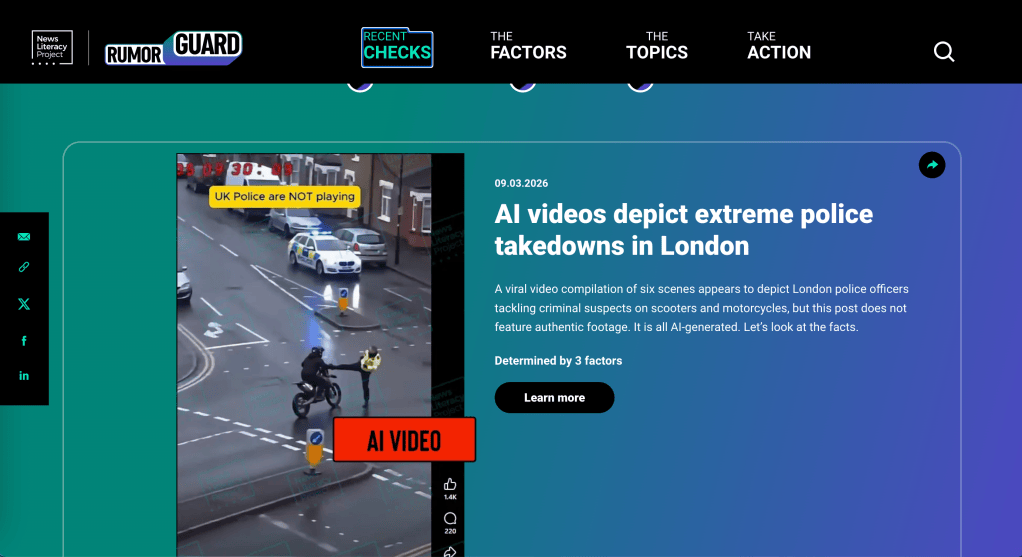
It seems aimed at teaching users how to tell real from fake when browsing online with real, current examples of mis/disinformation. One of the things that I really enjoyed about the site is where it provides articles on what quality journalism is, and tips on what steps to take when you feel something online is fake/misleading. I think it is a quality website with a noble mission, however I don’t believe it is as effective at its mission as it hopes.
I think it is a very effective tool for teaching and research, but based on research from Biological Conservation, simply correcting misinformation is not enough to change the minds of people. Concepts such as the continual influence effect, which states that even with a retraction or correction of misinformation it can still linger in their minds and influence decision making, have shown that
Misinformation is a complicated tool that simply correcting won’t fix. I’ve seen this problem in many leftwing circles where they hyperfocus on correction, but if this doesn’t actually help, what can they do?
There have been discussions around how the political left in the West have lost the art of storytelling and that it’s a large reason why they have been losing ground all over the world. This article from the New York Times discusses how political satire has essentially become irrelevant in modern times and instead we see these messages being presented through horror. Essentially political satire has changed the vessel it tells its stories through. The left has dedicated themselves to factchecking when they should be crafting a new story to sell to the voters.
The game I chose was Bad News where the user is prompted to use rhetorical fallacies and underhanded tactics to gain a loyal following and credibility amongst the audience. It guides you through headlines and memes to trick social media users into giving you their time and loyalty by attacking factual information.
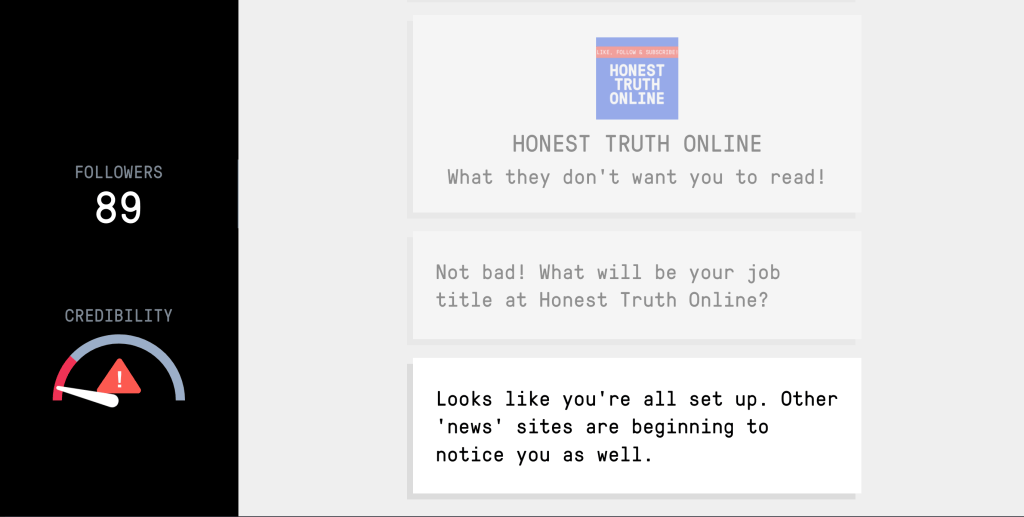
They guide you to make the right choices and will explain why a certain choice didn’t have the impact we thought. I really enjoyed the game’s explanations as to why something didn’t work. It seemed to really focus on the process of how mis/disinformation works to spread quickly.
This game was a lot of fun and I think it is a lot more effective at its goal. I feel with misinformation that showing an example, as opposed to explaining, is better at teaching the general public. The game gave really quick and simple explanations of its concepts but it seemed more focused on teaching us how misinformation builds credibility.
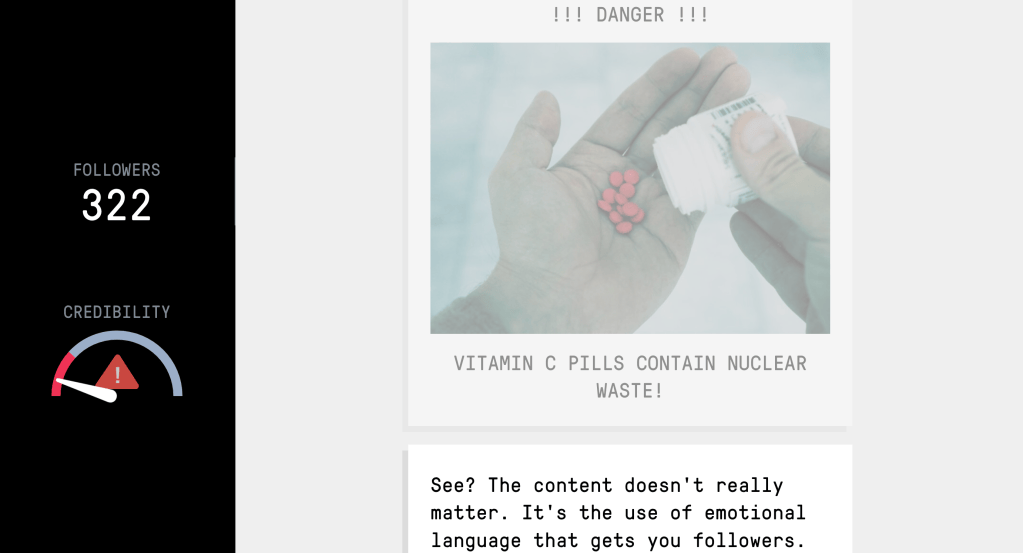
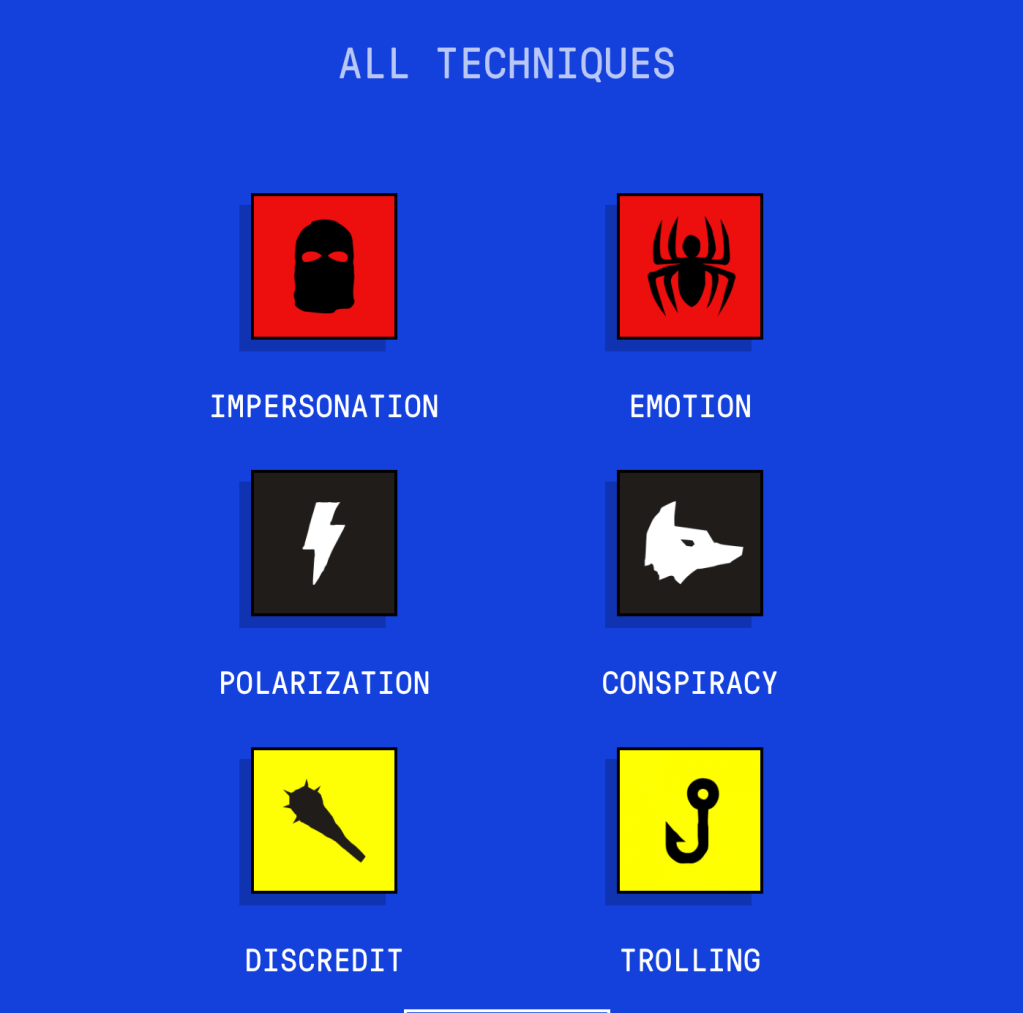
There are about 6 rounds in the game and it starts with impersonation to show how bad actors use others’ credibility to build their own, and ends with trolling to show how they distract from their dishonesty. Lisa Flazio talks about how repetition is a large reason why misinformation spreads quickly and why it’s so sticky to the minds of people. The game really emphasizes the same point throughout the game. Everytime I failed it would prompt me to try again but by further twisting the original statement for further effect. I would essentially repeat the same message till it took off online.