I started my project by considering what my goal was going to be. We’re constantly told in our courses that good content has a brand, and I wanted my project to be told uniquely from my perspective while still accomplishing the goal of the assignment. I thought back to those cheesy posters teachers would have of a cute animal hanging on to a bar and the caption would say, “Hang in there!”. This led me to think about how nostalgia over the past continues to have major effects on society at-large.
Nostalgia acts almost like a serotonin activator. Research shows that when people reminisce on the past it raises their mood and improves social connections, which is something humans innately crave. Specifically, Gen Z.
This took me back to the books of my childhood, iconic books that helped to shape not just my childhood but those of millions around the country (maybe the world). My generation has been defined by its seemingly diminishing ability to connect authentically with other humans. What I wanted to do was create illustrations that informed my fellow Zoomers about different concepts around misinformation. I took several book covers and recreated them around these concepts with little bits of advice on how to start counteracting misinformation in its various forms. These first 8 are based almost exclusively from my own childhood experiences so I would say they would be targeted towards a suburban mix of White-American and Latin-American Gen Z, around 24-29 (older Gen Z). This would be driven towards specifically Gen Z who grew up in blue-collar homes, typically more educated but not necessarily college graduates. I would say it’s a range from zoomers with some college education to college graduates. These illustrations focus a lot on encouraging them to discuss these topics with their family, and simplifying the concepts to easily explain to others, especially older family members.
I imagine this maybe as a social media campaign during an election campaign, warning voters of online misinformation, or maybe a back-to-school campaign by the University of Colorado system of public universities to educate students.
#1 – Goosebumps
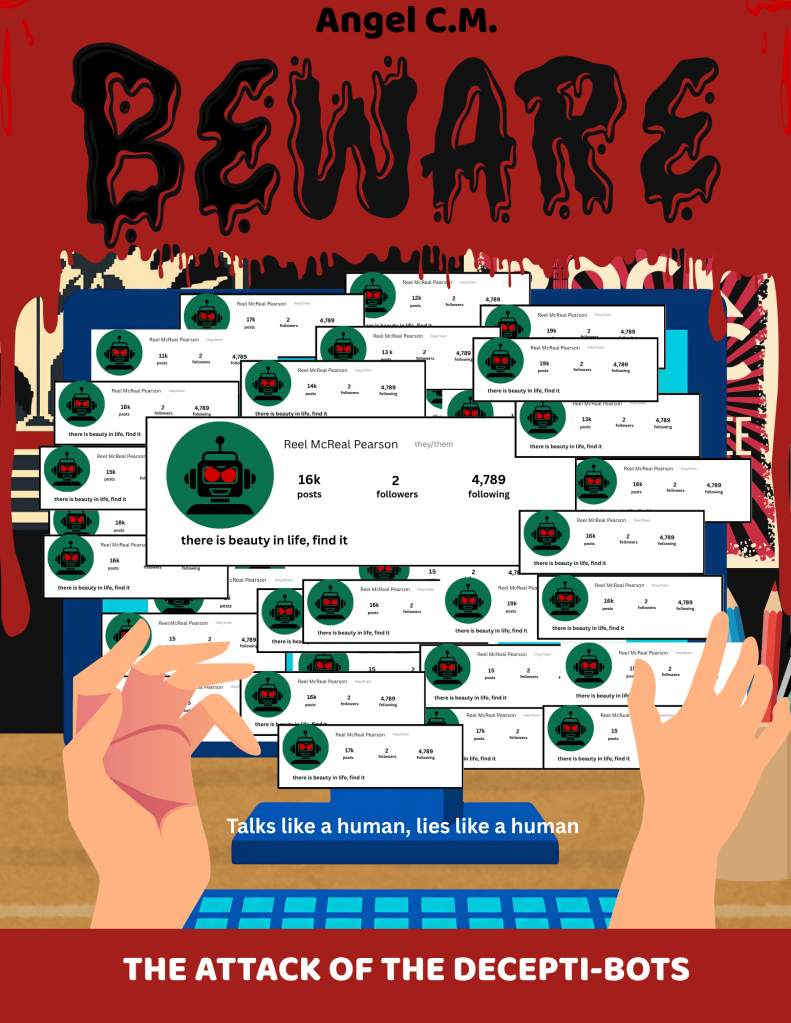
My first illustration is centered around Goosebumps. The cover was iconic for its various depictions of its horror stories, but also its campy elements of comedy throughout the series. I focused on bots for this after I noticed how much I interact with bots on the daily, and it reminded me of the article from class; #BotSpot: Twelve Ways to Spot a Bot. It was one of my favorites specifically for its iconic book covers. This one stays mostly true to the original without much captioning. I tried to emphasize the bots and some of the characteristics of a fake account, such as the weird follower/following ratio, strange, poetic bios,
#2 – Junie B. Jones
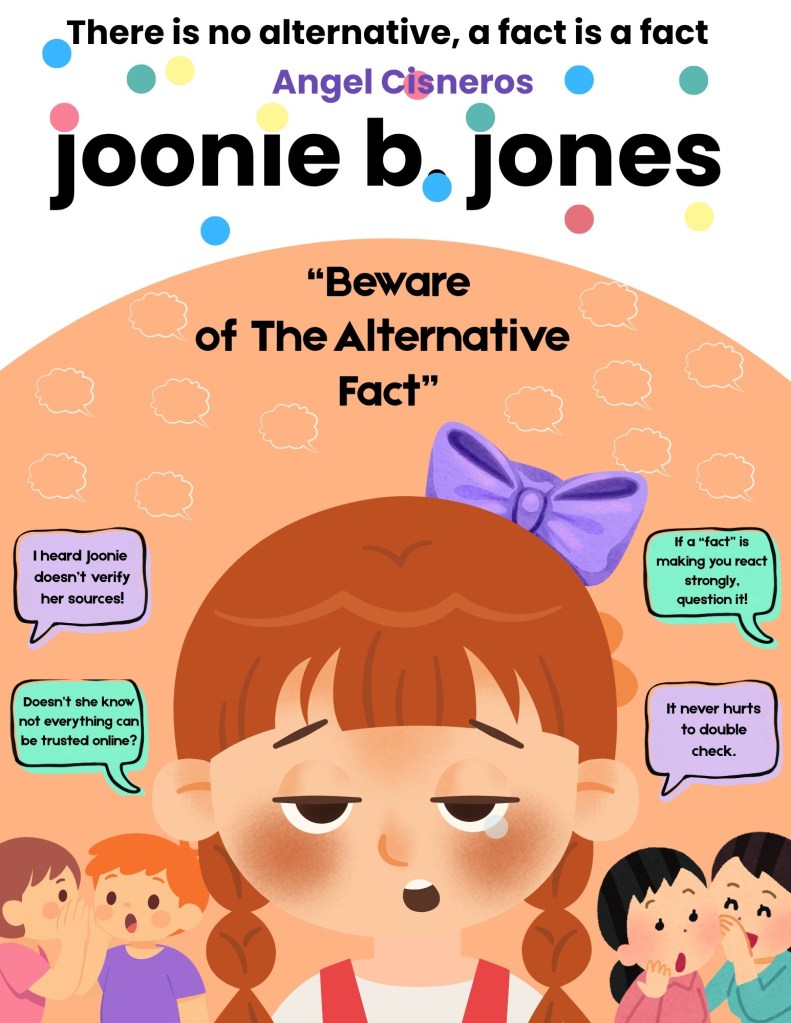
Junie B. Jones was a staple in elementary schools and my idea went straight to school gossip. I wanted to equate “alternative facts” as something as serious as elementary school gossip. I tried to make the message a little more broad, encouraging users to question emotional reactions to online content. I also wanted to twist around the popular conservative saying “Facts don’t care about your feelings.”
#3 – Diary of a Wimpy Kid
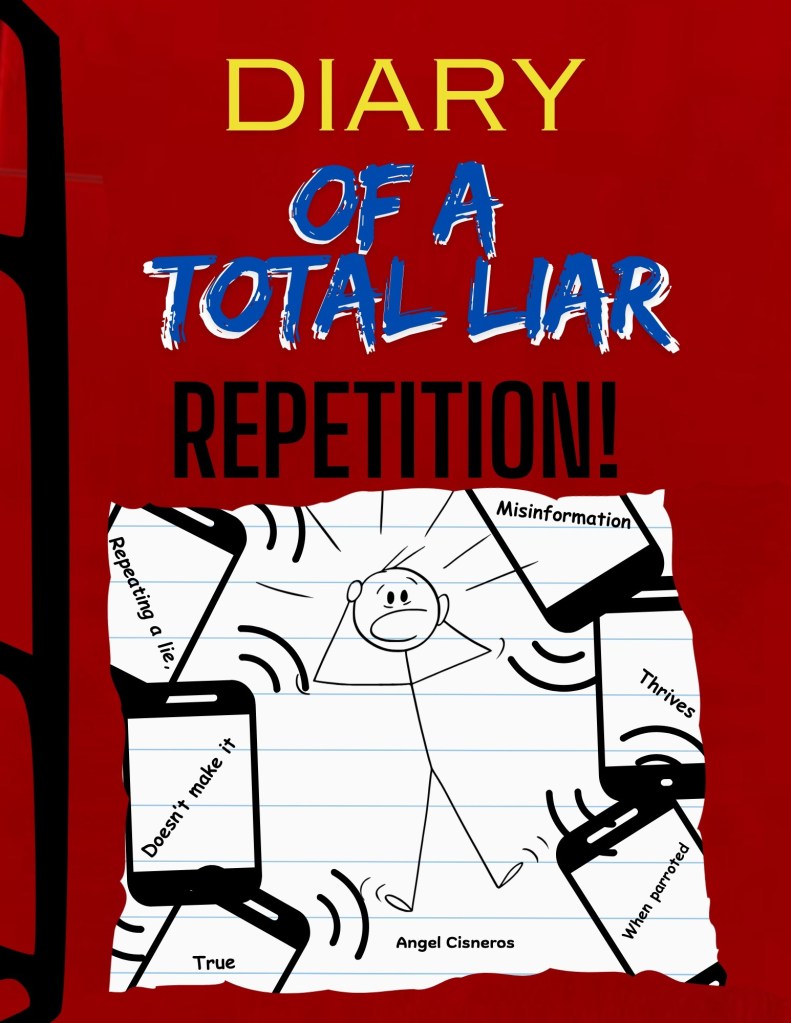
This was a staple for my early teen years, quite literally one of the funniest books I can remember. It was no brainer to “pay homage”. This one I thought would work well around the illusory truth effect, but simplifying it to only repetition. This series usually would title each book around single words or 2 word phrases so I thought it’d fit perfectly for it. I wanted to encourage users to rethink when mindlessly resharing content, like how a parrot will repeat words even though it likely has no idea what they mean.
#4 – Percy Jackson Series
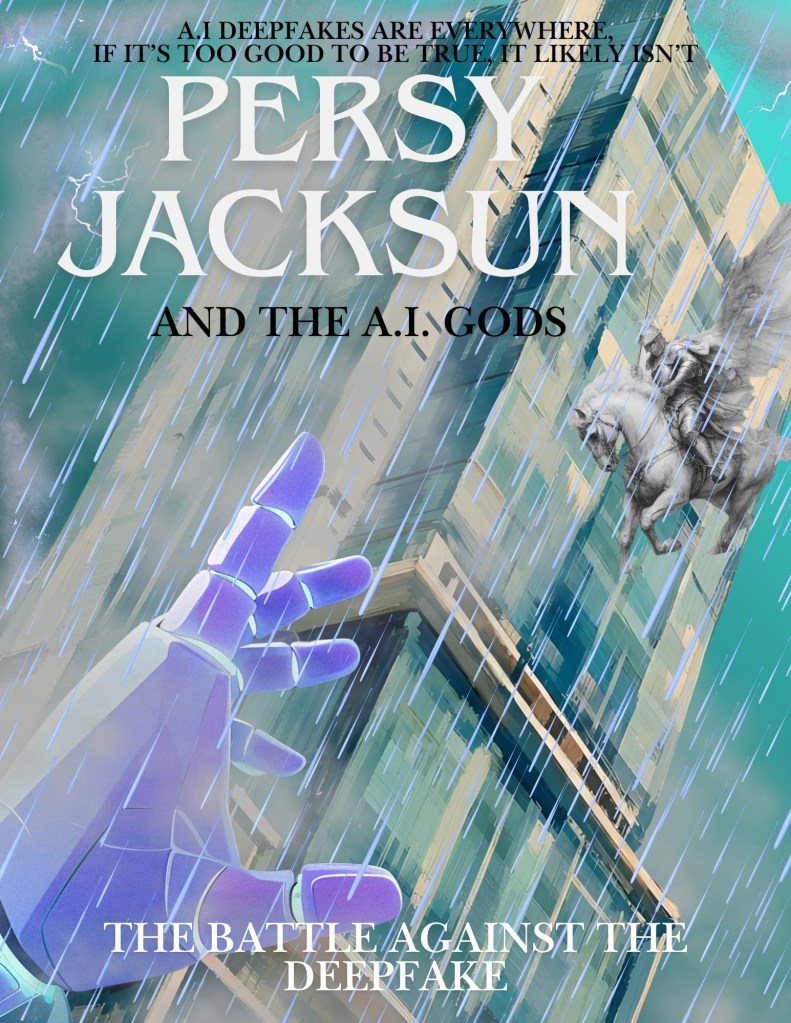
The illustration is meant to represent AI as the biggest contributor right now when it pertains to misinformation. I wanted to link it towards the fantasy and how AI has a tendency to distort every image it creates in some way. It’s a large threat, but just by being a bit more aware of the content we share we can better spot it. I also wanted to recreate the bigger than life covers of the novels.
#5 – Harry Potter Series
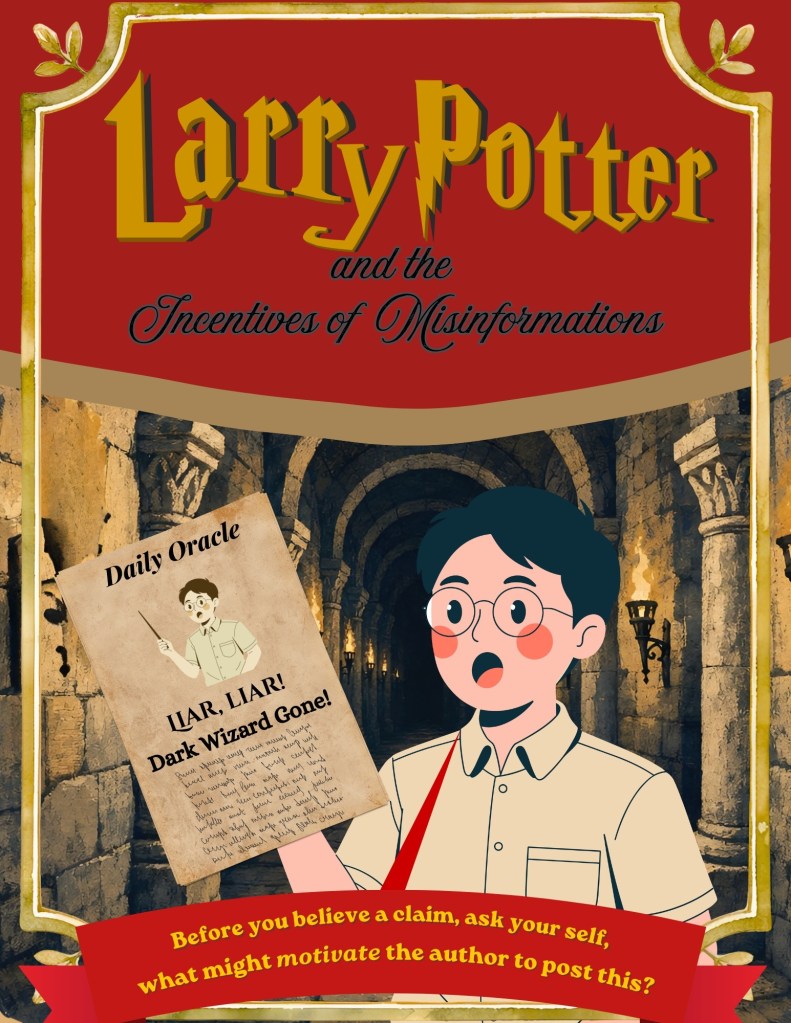
This illustration revolves around incentives behind misinformation. Doesn’t exactly recreate the book covers but it serves as a more direct approach. Doubt is such a major tool in disrupting misinformation just as much as it disrupts the truth. This encourages users to doubt the motivations of website authors when they make claims, regardless of who it is.
6# – A Series of Unfortunate Events
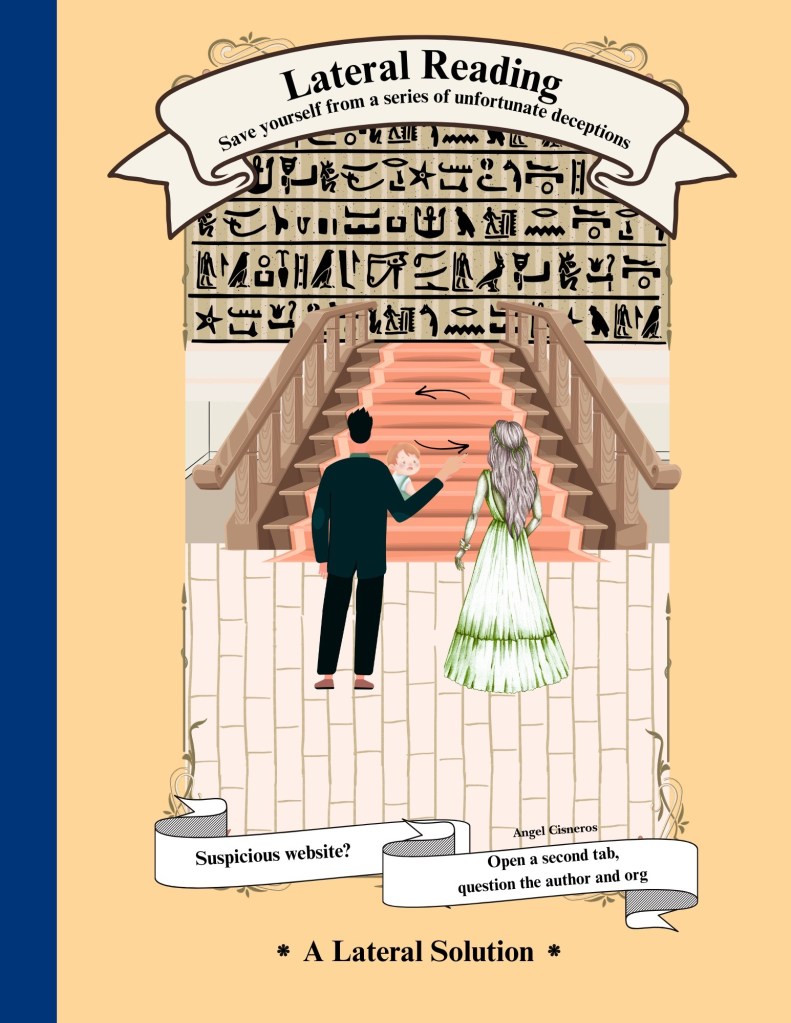
This concept revolved around A Series of Unfortunate Events and I wanted to sort of recreate the puzzles that they would face in the series then relate it to lateral reading. Suspicious websites act like a puzzle. Overcoming obstacles to get to the big picture. I didn’t want to give exact steps, but I attempted to format it in a way that readers can follow.
7# – Dr. Suess
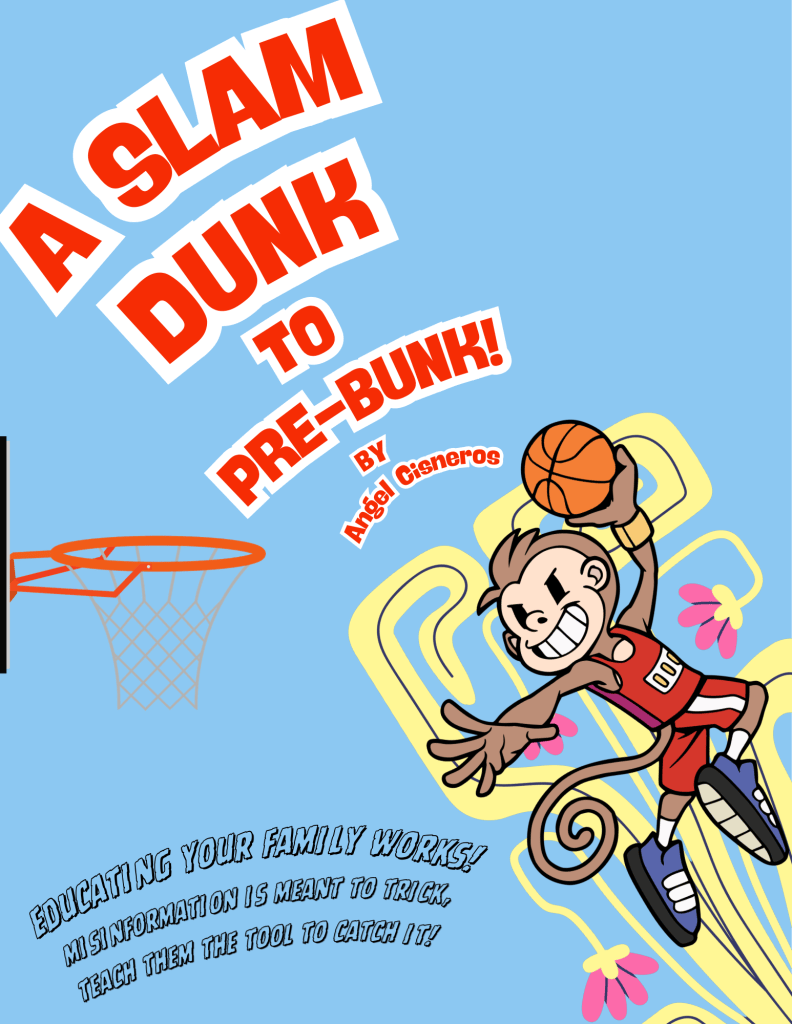
This was one of the more complicated topics to portray since pre-bunk isn’t exactly a well known term. Because of that I aimed to recreate a Dr. Seuss cover that portrays how educating family members is the “slam dunk” to protecting them from online deception. An easy rhyme with simple advice.
8# – Magic Tree House
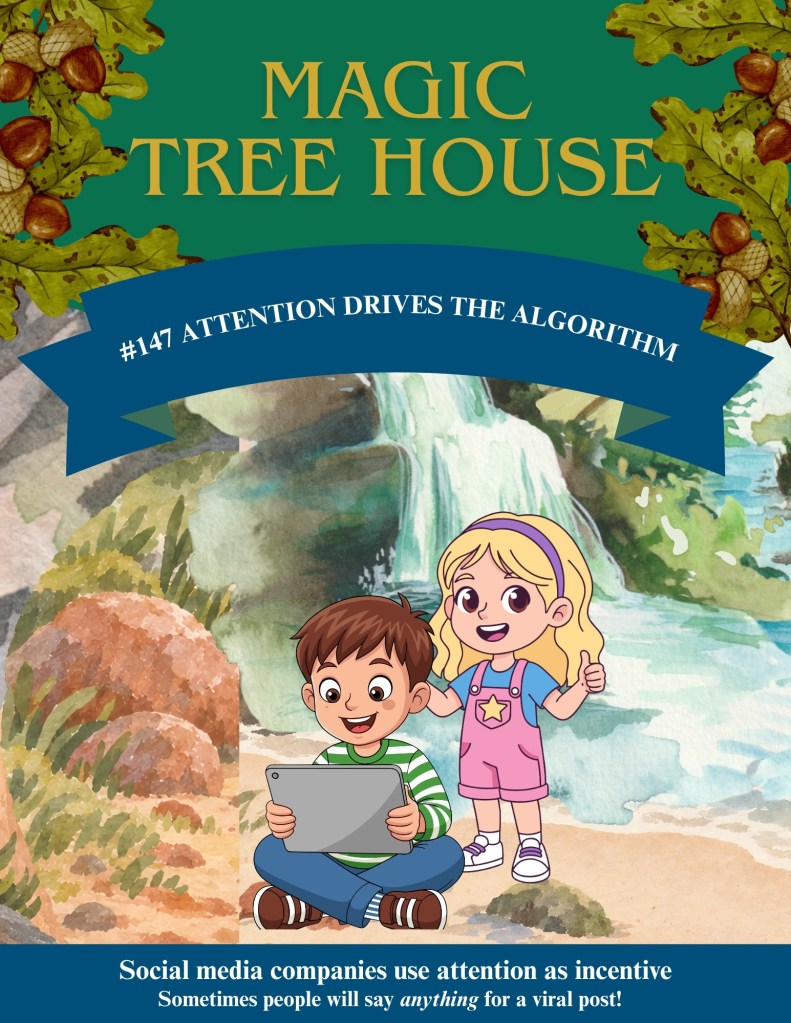
And finally, I wanted to portray one of the main culprits of misinformations spread: an attention driven algorithm. I wanted to capture the adventure that’s portrayed on their covers, and used where the author would typically be placed to highlight social media’s influence on the incentives for people’s content.

